
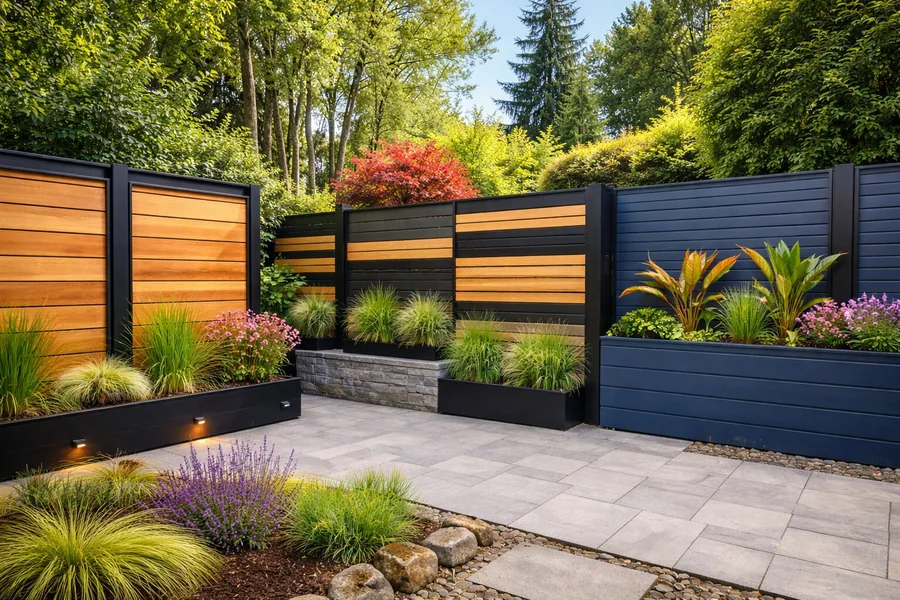
Key Takeaways
- Choose a fence based on its primary purpose: privacy, safety, pet containment, security, or appearance.
- Compare materials by maintenance needs, climate performance, strength, and long-term cost.
- Inspect slope, drainage, sun exposure, wind, utilities, and property lines before selecting a style.
- Plan gates, latches, posts, finishes, and future repairs as part of the original budget.
- Review local requirements, HOA rules, easements, and pool-barrier standards before construction begins.
A new fence can improve privacy, define a property, protect children and pets, and make an outdoor area more useful. Still, the right choice is rarely as simple as choosing the most attractive panel at a home improvement store. A fence has to work with the yard’s layout, local weather, household routines, and the amount of upkeep the owner is willing to handle.
For property owners in Fresno and surrounding Central Valley communities, hot sun, dry conditions, irrigation overspray, wind, and changing soil conditions can all affect a fence over time. Kerb Appeal Fenceworks provides residential, commercial, and public works fencing options that can be matched to practical needs, from redwood privacy fencing and vinyl enclosures to chain link, ornamental iron, gates, and weatherization.
Why Fence Material Is Only Part of the Decision
The lowest initial price does not always produce the lowest cost of ownership. A basic fence may need recurring staining, cleaning, hardware adjustments, or board replacement. A more durable or lower-maintenance option may cost more up front but save time over the years. The best choice depends on how the fence will be used every day.
For example, a busy family may prioritize a low-maintenance vinyl or ornamental fence around a play area. A homeowner who values a natural look may prefer redwood or cedar, while accepting the need for periodic inspection and protective finishing. Start with performance, then narrow the material and style choices.
Step 1: Decide What the Fence Needs to Do
- Privacy: Look for solid panels, board-on-board designs, or closely spaced vertical boards.
- Pet control: Use secure gates, suitable spacing, and a layout that discourages digging or squeezing through gaps.
- Child safety: Prioritize stable posts, smooth surfaces, reliable latches, and gates that close consistently.
- Security: Consider strong posts, durable rails, controlled entry points, and clear visibility around driveways or walkways.
- Pool protection: Use a non-climbable barrier and self-closing, self-latching gates, and confirm applicable local requirements.
- Appearance: Match the fence profile, color, and material to the home’s architecture and landscaping.
Step 2: Compare Common Fence Materials
Wood: Redwood, Cedar, and Treated Lumber
Wood offers warmth, privacy, and flexible design choices. Redwood and cedar are popular choices for homeowners who want a natural finish, while treated lumber can be useful for structural components. Wood does require attention to sun exposure, moisture, insects, cracking, and ground contact. The U.S. Forest Service recommends decay-resistant or pressure-treated posts for below-ground use, keeping boards off the ground, and using appropriate water-repellent finishes and corrosion-resistant fasteners.
Vinyl
Vinyl fencing provides a clean, consistent look without routine painting or staining. It can be an appealing choice for homeowners who want reduced maintenance. However, posts must be installed correctly, panels need room for normal movement, and impact resistance still matters. A vinyl fence is low maintenance, not maintenance-free.
Chain Link
Chain link is often a practical fit for side yards, gardens, pet areas, larger lots, commercial sites, and locations where airflow and visibility are valuable. Privacy slats, screening, or landscaping can add visual separation without losing the fence’s basic utility.
Ornamental Iron, Aluminum, and Steel
Open metal fencing can create a polished boundary while preserving sightlines. Aluminum is lightweight and naturally rust-resistant, while steel and ornamental iron offer substantial strength when properly protected from corrosion. These materials work especially well around front yards, pools, walkways, and driveway gates.
Step 3: Match the Fence to Climate and Yard Conditions
Climate affects every fence material. In sunny Fresno-area yards, strong ultraviolet exposure can fade finishes and heat dark-colored materials. Wood may dry, shrink, or crack when exposed to intense sunlight without adequate protection. Irrigation that regularly hits posts or boards can create moisture problems even in a generally dry climate.
Before choosing a style, measure the full fence line and identify slopes, drainage paths, low spots, trees, roots, retaining walls, irrigation lines, and utility routes. A sloped yard may need panels that follow the grade or stepped sections that maintain level tops. Confirming the actual property boundary before ordering materials can prevent costly disputes and rework.
Step 4: Think About Height, Privacy, and Access
Open picket and ornamental designs define a space without blocking views. Semi-private styles allow air and light through small gaps. Full-privacy designs use solid panels, shadowbox construction, or board-on-board layouts. Keep in mind that privacy depends on more than fence height. Neighboring elevations, second-story windows, slopes, and landscaping can all affect what is visible.
Plan gates early, not as an afterthought. Gates carry more movement and stress than standard fence panels. Determine whether the opening needs to accommodate a wheelbarrow, mower, trailer, vehicle, or service access. Hinges, latches, stops, locks, wheels, and gate operators should be selected for the gate’s weight and frequency of use. Pool gates deserve special attention, including self-closing and self-latching hardware. The U.S. Consumer Product Safety Commission pool barrier guidance is a useful starting point, but local rules must also be verified.
Step 5: Build a Realistic Budget
A detailed fence budget should include more than panels and labor. Ask for quotes that clearly identify:
- Linear footage, fence height, and material grade.
- Posts, rails, fasteners, concrete, and protective finishes.
- Gate sizes, hardware, locks, and operators.
- Old fence removal, disposal, site cleanup, and access challenges.
- Drainage corrections, root issues, slopes, permits, surveys, or inspections when needed.
Repair or Replace?
A repair may be sensible when damage is limited to a few boards, a loose hinge, a worn latch, or one small weather-damaged section. Replacement may be the better value when multiple posts lean, rot, or rust, gate issues keep returning, or the fence has shifted due to drainage or soil movement. A partial repair can also look mismatched when the existing fence is heavily weathered.
A Simple Fence Selection Checklist
- Define the fence’s primary purpose.
- Measure the property and confirm boundaries.
- Check local rules, easements, HOA policies, and pool requirements.
- Evaluate sun, wind, drainage, soil, slope, and irrigation exposure.
- Compare wood, vinyl, chain link, and metal options by maintenance and service needs.
- Include gates, hardware, removal, and finishing in the budget.
- Schedule periodic cleaning, inspections, and minor repairs after installation.
Conclusion
The right fence is one that fits the property rather than forcing the property to fit the fence. By considering purpose, materials, climate, yard conditions, gate needs, maintenance expectations, and local requirements, homeowners can choose a fence that looks appropriate now and continues to perform well for years.
